In this essay
The conversation has movedWhy speculation mattersThe questions I want to spend time onJoin the Campfire - Bring a QuestionThe more I thought about this article, the more I realized I was writing the wrong one. The first version would have been a better article ten years ago. It was still trying to get people past the idea that the whole UFO subject is crazy and convince them that there is evidence worth looking at.
With Dr. Phil having David Grusch on for a full interview, and even Neil deGrasse Tyson saying he can’t stay silent and has to participate because of the high-ranking people coming forward, it seems we are past that conversation in the zeitgeist, and we’ve moved into bigger questions. While Tyson still says eyewitness testimony isn’t scientific evidence that NHI are here, the societ at large is moving past “is it real” to “There’s something here, but what is it?”. That, and a whole bunch of other questions, is what I’m here to talk about today.
This Substack is reader-supported. To receive new posts and support my work, consider becoming a free or paid subscriber.
Despite the move in public sentiment, we still don’t have proof, which leads us to speculate on all the possibilities. While speculation is often looked down on, I think it is EXACTLY what we need to be doing right now.
Where this is going
The cultural conversation has shifted. Speculation gives us ideas we can work on and test against the evidence. These bigger questions need some individual attention.
Spend a few minutes thinking about the NHI or UAP speculation you want to bring to the table, then share it in the comments below.
The conversation has moved
You can bring this up with your mom, your coworkers, or somebody over dinner now and have a conversation that goes somewhere. At least, that’s the change I’ve noticed. More people seem willing to say, “I guess it does sound like it could be real. What do you think is going on?”
We’ve had military witnesses and a former intelligence official testify publicly before Congress. We have government reports describing observations that remain unresolved. Those things give us something to work with, even though they don’t establish an NHI explanation.
I feel like we’re past spending the whole conversation asking whether we’re wasting our time. There’s something here worth understanding, and we really don’t have a good handle on what it is or where this is heading.
We need a combination of government transparency and public, open-source research with people willing to put information together. I certainly don’t think the government has all the answers, and I don’t want us sitting around waiting for them to give us before we allow ourselves to think about the possibilities.
Why speculation matters
If we are being honest, we don’t know what’s going on. We don’t know where this is heading well enough for anyone to sit here and poo-poo an idea just because it sounds wild or far-fetched. Some ideas will have more evidence behind them than others. We can look at that. But I think we need some room to speculate and share those speculations openly before we’ve worked every part of them out.
I’ve had crazy ideas that never went anywhere. They were fun to think about, dream about, and play with for a while. I don’t think that’s wasted time. Sometimes you have to follow a thought a little way before you can tell whether there’s anything to it.
That’s what has value here. Somebody asks a question or offers a possibility. Someone else has a piece of information that might fit, or a reason it doesn’t. We can combine that speculation, plus whatever evidence we can find, into a workable theory that can then be tested against the evidence, against what we know.
An abstract idea starts to get some shape. We can look at what it explains, what it leaves out, and what we’d expect to find if it were right. We might realize we’re missing the very thing we’d need to test it. That gives us a better question to work on, too.
I want a big dose of open-mindedness, curiosity, and creativity in this conversation, along with some honesty about what we actually know. If an idea doesn’t hold up, we can adjust it or set it aside. If something new comes along, we can bring it back out of the box and take another look. We don’t have to let every interesting idea become our whole belief system.
As more information becomes public through government disclosures, open-source work, and further research into ancient history, we can keep comparing it with these ideas. Maybe a connection we thought was meaningful falls apart. Maybe something we dismissed deserves another look. We need to be able to change our minds as we go.
That’s what I’m trying to get to with these articles. Connecting these dots and working through these theories could lead to something tangible, something that helps us understand what we’re dealing with. If we are not alone, that has a lot of implications for how we understand human history and our own place in the world. I want to spend some time thinking about those implications while we keep looking for answers.
The questions I want to spend time on
So, taking the possibility of non-human intelligence seriously, these are the questions I keep coming back to:
- What do we mean when we say NHI? What might be included in that term that we miss when we just say “aliens”?
- Are we talking about one intelligence, multiple intelligences, or different forms of the same thing? We may be putting a lot of different experiences under one name.
- If there is more than one, how do they interact with each other? What might those relationships have to do with us?
- How long have they been here? What would we need to find in our history to begin answering that?
- What do they want? What could we learn from the encounters people describe, and how much are we projecting our own motives onto them?
- Why do they remain partially hidden while still allowing some visibility? Why do people report encounters without the rest of us having a clear picture of what’s happening?
- Why do we have both experiences that involve physical objects and bodies, while some are more paranormal or metaphysical, and some that have a strong mix of both? How do we make sense of those different kinds of reports?
- Why do some encounters take forms that look religious, symbolic, dreamlike, or specific to a culture? How much does the way we understand the world shape the way we describe an experience?
- What would let us distinguish NHI from secret human technology, deception, folklore, misidentification, or a psychological event? What evidence would actually help us choose between those explanations?
- What does the government actually know, and what does it only believe? How many of these same questions might the people involved still be trying to answer?
These questions need individual attention, thoughts, and ideas. I want to work through them in future articles, and I want to hear what other people think as we do it. There may be connections somebody else has spent years thinking about that haven’t even occurred to me.
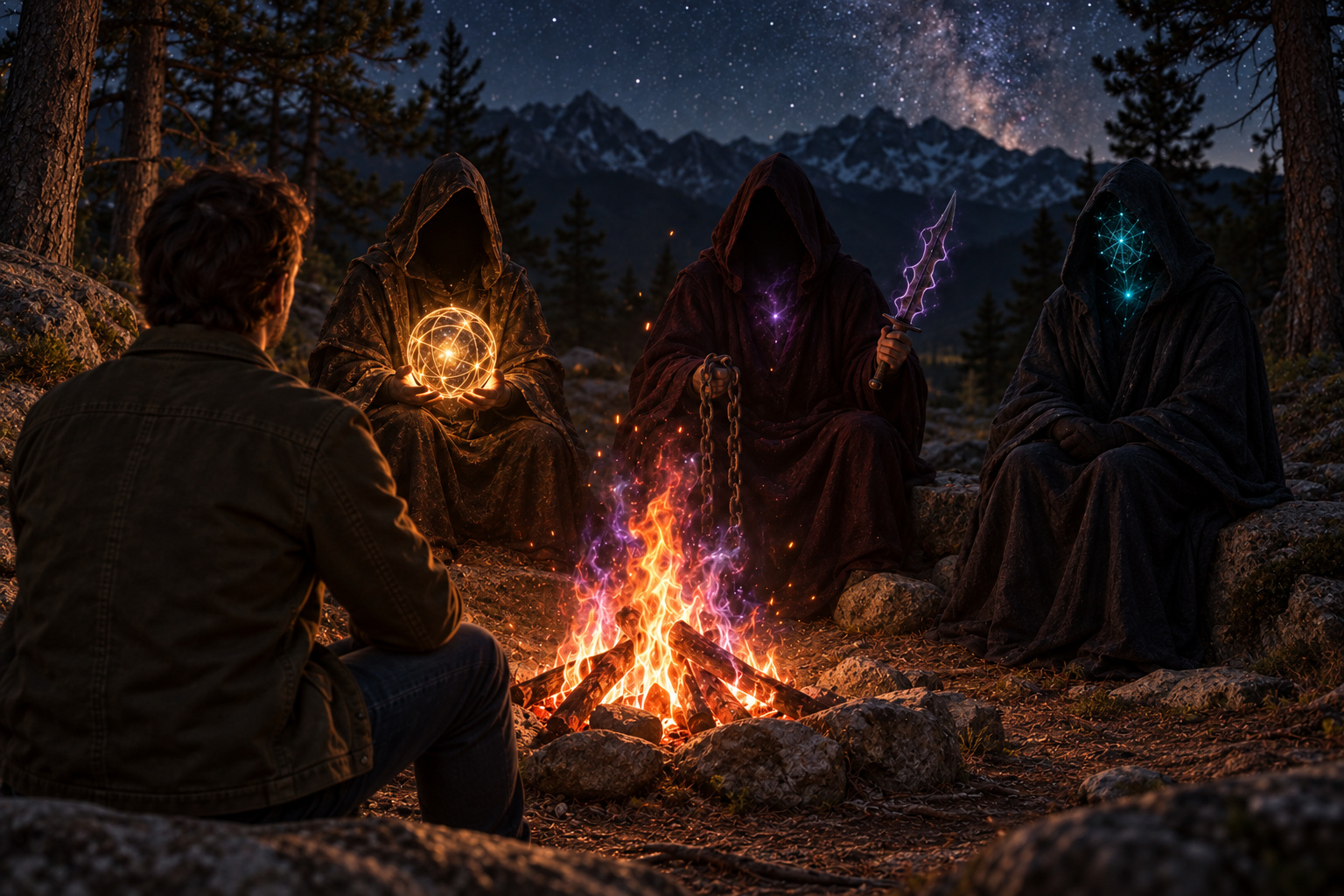
Join the Campfire - Bring a Question
Here’s what I want you to do right now
Pick one of these questions and give it 5 to 15 minutes’ worth of thought. Then come back with a genuine answer in the comments. Your wild speculation is welcome. Tell me what you think, what led you there, and whatever evidence or experience you think is relevant. It can still be an idea you’re working on.
I recently listened to Jordan Crowders Mycelial Singularity , which is worth a listen and is the exact kind of creative speculation that conversations like this need.
I think Substack is a good spot for this. People here are willing to sit down, spend a few minutes reading, think about something, and respond to somebody’s article. That’s the sort of conversation I want to have around here. We can ask each other questions, compare what we’ve found, and give an idea enough attention to see where it goes.
I’d like to hear yours.
This Substack is reader-supported. To receive new posts and support my work, consider becoming a free or paid subscriber.